tl;dr
- Don’t play her if the enemy team has a lot of tanky heroes.
- Stealth does not mean invisible. Even while cloaked, you are still vulnerable if you position poorly.
- Don’t wait for the perfect opportunity. Instead, create an opportunity.
- Use your Holo Decoy to tank turrets and block skillshots.
- Coordinate your Precision Strike with lock-down abilities from your allies.
- You can’t blow everyone up with one full rotation; pick your targets wisely.
First, a story.
My initial experience with Nova was a bad one.
When I first started playing Heroes of the Storm, I didn’t really know the difference among any of the heroes because I was too busy focusing on improving myself. But, once I got more comfortable, I started handing out beta invite keys to my friends and playing games as a group.
One of these friends was
Ed. I made his name red there because sometimes, the things he does in-game make my blood boil bright red.
I’ve known Ed since before I was in kindergarten. Because of our proximity and shared interest in gaming, our friendship has lasted throughout all these years. I naturally thought he would be a good partner for Heroes of the Storm.
He had a liking for Nova. She happened to be free the first week he played, so he played Nova. Over and over and over again.
At this time, I was playing less sneaky characters, like Sylvanas and Zagara. Ed would come to my lane and sit in a bush, waiting for the absolute perfect moment to strike. He would wait for nearly a minute. Then he would leave.
I would get very frustrated at him, telling him to create the opportunity, rather than waiting for it. He wouldn’t really respond, just mumble a bit.
A minute or so later, he would come back. He would get back in the same bush and wait again. And, as you might have imagined, he would leave after doing nothing for another good minute or so.
Eventually, Ed got bored of Heroes of the Storm, and acquired a massive obsession for Final Fantasy XIV. Even after his departure, my love for HotS persisted, and I played a lot on my own, seeing a lot of Novas on the enemy team.
Every time I did, I had no problem dealing with her. More often than not, I was playing Zagara (because I spammed a ton of Zagara games while I was grinding to Rank 1). The instant I saw her shimmer, I would start running back in a zig-zag. The instant she revealed herself, I would tag her with my Hunter Killer, and the gank was over. Nova literally just ganked herself by coming to my lane, because she would walk away after losing more than half her health pool.
Because of this, I had always thought that Nova was a terrible hero. I avoided playing her for a very long time, and didn’t even consider trying her until I had about 400 total games. But one day, I thought I should give her a chance …
… and the rest is history.
Ability breakdown
- Basic Attack
Nova’s basic attack is worth discussing because it changes at Level 7 if you follow my suggested talent build.
After picking up Anti-Armor Shells, Nova’s attacks will hit 250% harder, but will fire out at a proportionally slower rate.
At first glance, this doesn’t seem like a good talent because it increases the chances of dealing overkill damage and slowing down effective DPS. For example, if your attack speed is 1 attack per second and you deal 100 damage per attack (100 calculated DPS), and you need to kill two minions with 10 HP each, it will take you 1 second to kill both (kill Minion #1 at second 0, kill Minion #2 at second 1). But, if your attack speed is 10 attacks per second and you deal 10 damage per attack (still 100 calculated DPS), and you need to kill the same minions, it will take you 0.1 seconds (kill Minion #1 at second 0, kill Minion #2 at second 0.1).
But, Nova isn’t designed to kill minions. She’s designed to kill heros. Let’s take a look at the same example using a heroic health pool.
Let’s pretend Nova’s attack speed is 1 attack per second and she deals 1,000 damage per attack. Valla’s attack speed is 5 attacks per second and she deals 200 damage per attack. Both heroes have a calculated DPS of 1,000 per second. Suddenly, a wild 1,000-health Arthas appears! Nova instantly kills him because she attacks once and Arthas’ entire health pool is gone. Valla needs to spend 0.8 seconds attacking him because she needs to attack five times, giving Arthas a 0.8-second window to retaliate.
This is exactly what we want with Nova – to kill an enemy before they have a chance to retaliate.
One useful thing to note about Nova’s post-Shelled basic attacks is the animation that is added to her gun that lets you know when your basic attack is available again. It will start as a large ring around the tip of your rifle, then slowly shrink in size until it disappears. If you keep an eye on this, it will help you optimize your movement between attacks, as you’ll know when you can stop and shoot again.
- [D] Permanent Cloak, Sniper
When out of combat for 3 seconds, Nova will gain stealth, which turns her translucent. Opponents will be able to see a shimmer on their screen where Nova is, but she will not appear on the minimap. Stealthed units are untargetable, but still take damage from area-of-effect abilities. Nova leaves stealth after taking damage, using abilities, attacking, or channeling (e.g., Hearthstone or mount).
Nova’s Basic Attack range is 20% further, and Nova’s vision range is 10% further than other heroes.
This extra attack range means that you’ll be able to hit an enemy hero without them being able to retaliate. Although we ideally want to kill someone without them being able to do something in return, this won’t necessarily always happen during early levels when your damage is still scaling up. So, by taking advantage of this extra attack range, you can still prevent them from retaliating – not because they’re dead, but because they can’t reach you. Unloading your combo and immediately walking away means the enemy will be left slowed from your Pinning Shot and too far away to right-click you to death.
- [Q] Snipe
Snipe is a long-range linear skillshot that deals heavy damage to the first enemy hit. If you miss your Snipe, you will miss out on a lot of your damage, and your target most likely will not die.
When using Snipe, be cautious of minions and summons (e.g., Nazeebo’s Zombie Wall) that could block the projectile.
To improve ease of aiming, try to position yourself so the travel path of your Snipe is as parallel as possible to your opponent’s movement (as opposed to perpendicular). This will improve your accuracy because, when shooting parallel, one “unit” of movement in your opponent’s path is more likely to already be on the path of the shot projectile, but when shooting perpendicular, one “unit” of movement will very easily take them out of your Snipe’s path. By adjusting yourself to create more points of intersection, there’s a higher chance your Snipe will hit your opponent along its path.
- [W] Pinning Shot
This ability deals some damage and slows your target by 30% for 2.25 seconds. Pinning Shot synergizes well with Snipe and Precision Strike because skillshots are easier to connect onto slower opponents. It also synergizes with the rest of your team, as they will be able to more easily catch up to a slowed target to finish them off (if you didn’t already kill them).
This is the only form of crowd control Nova has (apart from just killing her pursuant). Sure, it’s not hard crowd control like a stun, and it only slows your opponent. But, this movement speed impairment could be the difference between you making it to safety and you dying.
- [E] Holo Decoy
Holo Decoy creates a clone of Nova that appears to attack enemies for 5 seconds. Using this ability does not break stealth.
When I was first learning Nova, I thought this ability was useless until Level 13 when I took Lethal Decoy, and never used it until then so I could save mana. I later found out that this was the very incorrect thing to do, as the usage of Holo Decoy will set apart those who have and have not mastered Nova.
In a normal and calm situation, because of the suicidal and non-responsive AI on the clones, most people will immediately know which Nova(s) are clones and which is the real hero. But, when things get chaotic (i.e., during team fights), and you start imitating the decoys’ movements, the situation starts to get a lot more confusing for your opponents.
Because I think Holo Decoy usage defines the Nova player, and it’s the most difficult skill out of her kit to use well, I’ve devoted an entire section to this ability, which you will find later on in the guide.
- [R] Triple Tap
Popular among newer Nova players, not only because it’s the only heroic ability available at early levels, but also because it’s the easier one to use, Triple Tap is a point-and-click ability that locks onto a target and fires three homing shots for heavy damage. The catch is that these shots can be blocked by structures or other heroes.
When used randomly, the ability probably feels underwhelming. Heroes can easily walk behind their walls, turrets, and forts to avoid damage; when not near any buildings, the target’s allied tanks can get in the way and soak the incoming lethal damage. However, when timed properly, Triple Tap feels very unfair to its unprotected target, as it has enough guaranteed damage to nearly 100-to-0 a lot of squishy carry heroes.
- [R] Precision Strike
Nova’s second heroic option is one of very few global-range abilities in the game. Precision Strike allows you to deal heavy damage to all enemies within a circular area after a 1.5-second delay. If you’re into lore and the origins of these characters, Nova is a Starcraft character, and Precision Strike is the equivalent of her Nuclear Launch.
Because of the delay on the damage, if you’re just throwing out the ability, your opponents will most likely move out of the way, and you’ll hit nothing. However, when paired with lock-down abilities like Zeratul’s Void Prison (make sure your Zeratul deactivates it before the damage portion strikes!) or Zagara’s Devouring Maw, this ability can devastate the enemy team and single-handedly win you the entire fight.
More about basic attacks and stutter stepping
This information about stutter stepping applies to all heroes, but is particularly important to those who rely primarily on their basic attacks to deal damage. It’s even more particularly important to Nova because of how important it is to optimize distance away from her enemies, as well as her extremely slow attack speed after taking the Anti-Armor Shells talent.
- What is stutter stepping?
Stutter stepping is a micro-management mechanic where you move a character between their attack animations. It is sometimes referred to as orb walking or kiting.
You do this by basic attacking an enemy, then, immediately after the projectile leaves your body (or the damage registers on your enemy, if you are a melee character), moving away to your desired location. Your desired location could be away from your enemy if you are retreating, or towards your enemy if you are chasing.
It is important to spend as little time as possible “doing nothing.” If you auto attack while standing still, your “standing still” time is considered “doing nothing.” Instead, during this time, you could be running away, pursuing your target, or at the very least, chaotically moving around in random directions to make it more difficult for the enemies to hit you with skillshots.
- How do I know when to start and stop moving?
You should start moving the instant your basic attack projectile leaves your body if you are ranged, or the instant the damage registers on your target if you are melee. There is no need to wait for the complete basic attack animation to finish; by moving, you cancel the unneeded part of the animation.
You should stop moving to attack your enemy again when your basic attack cooldown is complete. This cooldown becomes shorter as you gain attack speed. To find out the duration of this cooldown, attack minions without stutter stepping (or by intentionally stutter stepping too fast) until you figure out the tempo and rhythm of your attacks.
- What does it mean to stutter step too fast or too slow?
Stutter stepping too fast means that you queue up the attack command (i.e., by right-clicking on an enemy, or pressing A then clicking on an enemy) too early. Stutter stepping too slow means that you queue up the attack command too late.
Both of these scenarios are bad because it does not provide a perfect balance between movement and attacking. If you stutter step too fast, it means there is a duration where you are standing still because your attack is still on cooldown. If you stutter step too slow, it means you are not maximizing your damage output because you are not taking every possible opportunity to attack (this extra delay will eventually add up, and could make you end up missing an entire attack that you could’ve done in the same amount of time).
Nobody is perfect, and it’s highly unlikely that you are going to get the exact timing correct on every single basic attack. So, if you are going to err, it’s better to err on the side of going too slow, rather than too fast. This applies not only to Nova, but all basic-attacking heroes.
Stutter stepping too slow means you might miss out on a bit of damage, but stutter stepping too fast means you might get yourself killed (because you’re stopping in place). Your life is a lot more important than any little extra bit of damage you might be able to output.
- Why is knowing about stutter stepping especially important for Nova?
Because of Nova’s lack of escapes (i.e., no mobility abilities), it’s important to maximize the distance away from her enemies by moving as much as possible between attacks (without excessively wasting damage). If you stutter step too fast with Nova, even that tiny fraction of a second that you spend standing still could end up easily getting you killed.
On top of that, keeping the tempo of your attack speed becomes harder when it’s as slow as Nova’s after Anti-Armor Shells. In the thrill of a fight, it’s very easy to rush yourself, and these two factors working together can cause the chances of you stutter stepping too fast to skyrocket.
Luckily, Nova has a visual indicator for when her auto attack is available, and you should spend some time in a custom game basic attacking things and looking very carefully at the animation if you want to truly master Nova. This was mentioned earlier, but again, the animation is a circle around the tip of Nova’s rifle that slowly shrinks until it disappears; its disappearance signals the readiness of your next basic attack.
(Note: This is not a special rifle that is added to your user interface. This is the actual rifle that Nova is holding in her in-game character model.)
At first, when getting used to Nova, wait until you’re absolutely sure the circular indicator around your rifle has disappeared (and stick in a fraction of a second of buffer time) before queueing up your next attack. Once you start getting more comfortable with her attacks, you should try and input the attack command as close as possible to immediately after the circle disappears.
How to use Holo Decoy
- Use it to dive turrets.
As Nova, you will be ganking a lot. This means that you may end up diving turrets to finish off a kill. Create a decoy in range of the turrets to tank damage. Exchanging 50 mana for a safe dive and a lot of health saved is great value.
Being a stealth assassin, it is also your job to find and kill Abathur. He will most likely be under a fort. Spawn your decoy and wait for it to pull turret aggro before revealing yourself and bursting down the slug. By having your clone tank fort ammo, you’ll leave your own attack speed and movement speed as-is, increasing the chances of you successfully assassinating Abathur and walking away alive.
- Use it to block skillshots.
In large team fights, it’s worth throwing out your Holo Decoy(s) between your carries and your enemies to absorb stray skillshots.
Of the heroes currently in-meta, your decoys could eat the stun from Raynor’s Bullseye Penetrating Round, absorb damage from Nazeebo’s Corpse Spiders and Plague of Toads, take the blind from Li Li’s Blinding Wind, block Leoric’s Drain Hope, and deny Jaina’s Frostbolt, just to name a handful. All these abilities can change the pace of a fight, and having them wasted on a clone can put your team at a huge advantage.
- Use it to confuse the enemy.
Although most people won’t get fooled if you walk up to them during laning phase and drop down a clone, they may second-guess themselves when they’re focused on team fighting and a Nova pops out of nowhere.
The key to using Holo Decoy as an actual decoy is to wait until your opponent is distracted with something else. That, paired with moving your real self like the decoy (short movements, erratic stopping after taking several steps), can force your opponent to spend even one extra precious second to regain composure, during which you and/or your team can take their life.
- Use it to deal damage.
Once you reach Level 20 and take Lethal Decoy, Double Fake, and Rewind, you’ll have four damage-dealing clones after a full rotation. With each clone dealing 25% of your damage, you basically have two Novas on the battlefield in terms of potential damage output.
In late game, if you fail an assassination attempt, you’ll probably be in big trouble. Not only did you not eliminate an opponent to turn the fight into a 5v4, but you also revealed your position, leaving yourself vulnerable to counterattacks. Thus, the extra damage from your decoys is important, as it could mean the difference between killing an enemy carry, or dealing some damage then getting blown up.
Which heroic do I pick?
You should almost always pick Precision Strike if your allies have good area-of-effect lock-down.
The most common examples you’ll see of this, from in-meta heroes, is Zeratul’s Void Prison (make sure he knows he can deactivate it before your damage hits), Zagara’s Devouring Maw, and Malfurion’s Entangling Roots. Some other good lock-down abilities are Gazlowe’s Grav-O-Bomb 3000 and Diablo’s Apocalypse.
Those examples are lock-down on large scales, but remember that you don’t always have to try and get infinite value out of your Precision Strike by hitting the entire enemy team. For example, if a Kerrigan lands her combo on two targets, one of which is a high-priority carry, it’s fine to just use your Precision Strike so you can eliminate one enemy and bring the other down low.
Remember, the downside to taking Precision Strike is that it’s a skillshot, and you may miss it. If your allies can nearly eliminate the chance of you missing by stunning your targets, they’ve just taken care of the toughest part of Precision Strike.
You should almost always pick Triple Tap if the enemy team does not have a tank, your team has two or more warriors, you expect the game to go on far past Level 20 so you can take Fast Reload, and you are on a map that forces the enemy team to come out into the open and contest objectives if they don’t want to lose (like Haunted Mines and Sky Temple).
Yes, I realize that condition is extraordinarily specific, but you have to note that it’s very rare for Triple Tap to ever be considered a great idea, because of how easily it can be blocked.
If these conditions are somehow perfectly met, the playstyle for Triple Tap would be to sit back and wait. Your multiple warriors should be able to initiate the fight and take most of the damage, while dealing some back.
Once their entire team starts getting hurt, it’s time for you to join the fight. Angle yourself so you line up with the most vulnerable target, and channel your Triple Tap. If you did it right, you should’ve gotten the kill and the reset. Proceed to Triple Tap four more times to single-handedly kill their entire team due to their lack of a tank and friendly structures.
If your game does not fall under any of these “almost always” situations, play some games with both, and figure out which one you like best. Contrary to popular belief, Triple Tap isn’t as terrible as people think it is, as long as it’s not being used by a beginner who charges up three shots straight into the enemy fort.
The win rates of both these talents have historically been very similar. Sure, I realize that win rates don’t mean everything, but they still hold some weight in analysis. This implies that the probability of a new player throwing three shots of Triple Tap into a structure is about the same as a new player completely missing Precision Strike and hitting nobody.
I personally like to take Precision Strike more than Triple Tap because it’s less likely for a teammate to be able to save my target.
For example, if an enemy is slowed and I lock Triple Tap on them, the enemy tank can just dash between us and block my shots, even if my victim is immobilized. However, if I lock on Precision Strike, the only way an ally is going to save my target is if they get healed and shielded for an absurd amount of health.
I personally hate randomness, and when I play, I like to reduce as many extraneous factors as possible. This is the same reason I dislike critical hit and dodge mechanics in other MOBAs – the randomness messes with my calculations, and it forces the Law of Large Numbers to take into effect (because my opponents might get lucky, so I need to play more games to balance out the luck), rather than just going straight there out of skill.
Which level 4 talent do I pick?
In August 2015, Gathering Power was nerfed. Prior to the patch, the talent read, “Passively grants 5% Ability Power. Each Hero takedown increases this bonus by 2% to a maximum of 15%. This bonus Ability Power is reset to 5% on death.”
Post-patch, the talent was changed to read, “Hero takedowns increase Ability Power by 1%, to a maximum of 15%. Half of this bonus Ability Power is lost on death.”
Because of this change, a lot of people wondered if Gathering Power was still the go-to talent for Nova. This is exactly what Blizzard wanted – players thinking about which talent to pick depending on the situation, rather than there being just one “correct” talent choice at each tier.
So, apart from Gathering Power, what are Nova’s other options?
- Envenom is decent overall, but particularly good in a few situations where it’s considered a must-take.
Because of the long damage over time that it provides, it can counter Zeratul (or other Novas if you’re in a mirror match-up), preventing them from re-entering stealth.
Against team compositions with no supports, Envenom can also be helpful against high-mobility heroes like Illidan, who have a high chance of escaping with a sliver of health.
- Remote Delivery decreases the cooldown of Holo Decoy by 3 seconds and increases its range by 100%. This talent is an early-investment, late-return kind of talent. By itself, it seems pretty useless, effectively giving your Holo Decoy 20% cooldown reduction.
However, once you get to Level 13 and 16, and take the Lethal Decoy and Double Fake talents, Remote Delivery will provide a bit of synergy. Ultimately, it will give you a maximum 10% increase in damage after Level 16 (two clones that deal 25% of your damage each, able to be used 20% more frequently).
If you end up taking Rewind at Level 20 and use it immediately after your first rotation of spells, the 20% CDR portion of the spell will obviously become useless at that particular moment, but resume its normal use (+10% damage increase) afterwards.
- Perfect Shot rewards players for connecting their Snipes onto heroes by refunding 50% of the mana cost if it hits a hero, and 100% of the mana cost if it kills a hero. I think this is counterintuitive to Snipe’s playstyle.
You want to use your Snipe when you have good positioning to hit the linear skillshot without any interfering collisions. You don’t want to be encouraged to hold on to it and wait to get the last hit on the hero.
Not only might this cause players to bypass good positioning opportunities in order to get the last hit, but it also increases the chance of players not properly calculating when Snipe deals lethal damage, waiting too long, and wasting damage by overkilling their target.
Considering those options, if you’re dying a lot and you continue to get your Gathering Power stacks reset, then Envenom may be the best talent for you.
What are some other viable talent alternatives?
Relative to other heroes, Nova has very little talent flexibility.
Her first situational talent pick comes at Level 16, where you may consider taking Crippling Shot instead of Double Fake.
- Crippling Shot modifies your Pinning Shot so your target becomes Vulnerable, taking 25% increased damage for the duration of the 2.25-second slow.
If you take Rewind at Level 20, unless you make a critical error, you generally should not have any problems finishing off a carry during the late game, even without the vulnerability from Crippling Shot. However, what if the most threatening hero on the enemy team is their warrior?
Lately, a lot of warriors have been dealing a lot of damage, often more than dedicated carries. For example, beetle-build Anub’arak (before the beetle damage nerf) and Leoric often top the charts in damage dealt to heroes.
When the highest priority on the enemy team is someone with a massive health pool, Crippling Shot can help your team bring them down. In theory, if your team is able to burst down the tanky warrior after you initiate with Crippling Shot, your Pinning Shot essentially dealt 25% of the warrior’s maximum health, which is massive.
Remember that this talent should not be taken if another hero on your team has elected to take a talent that more easily applies Vulnerability (such as Sylvanas’ Cold Embrace for her Shadow Dagger, or Jaina’s Northern Exposure for her Cone of Cold). “Vulnerable” is a unique debuff, and you will not make someone doubly vulnerable by using Crippling Shot on them.
Nova’s next situational talent pick comes at Level 20, where she has two alternatives.
- Bolt of the Storm
This is the only defensive talent at this tier, and is worth picking up if you have been dying a lot.
Nova’s job is to deal as much damage as possible, and a defensive talent seems counterintuitive to her kit, especially when she’s a pure assassin and needs to go all-in on killing her target. However, remember that having lower damage output, but staying alive long enough to get a second rotation of spells off, is infinitely better than instantly dying before you can throw out a single ability.
Although Bolt of the Storm won’t let you escape crowd control like Cleanse might, it will at least reduce the chance that your opponents follow up when you get locked down. For example, if Tyrael uses his Judgment on you, it’s likely that he’s traveled a fair distance, and his team needs time to close that distance. Although Tyrael can start hitting you immediately after applying the stun, if you Bolt away, you’ll create distance from his team just as they reach you, preventing them from finishing you off.
And remember, Bolt can also be used offensively (although, you should be cautious when using it for this purpose). If a high-priority target is just barely out of range, you can Bolt into position and unload your combo. Just make sure you don’t Bolt yourself into a poor position – sometimes, after you’ve casted Bolt and landed at your new location, you realize it’s a lot more terrible of a place to be than you originally thought before you casted Bolt.
- Fast Reload
Fast Reload is just like a Rewind for your Triple Tap, on the condition that it scores a takedown. In my opinion, taking Fast Reload generally isn’t worth it because the situation needs to be too ideal for it to actually do anything.
In order for Fast Reload to score a kill, it needs to target an enemy who is already somewhat low of health, away from their allies, and away from their structures.
I also don’t like the premise of this talent for the same reason that I don’t like Perfect Shot – because it encourages people to hold on to their abilities to get the last hit, increasing the chances of wasted damage through overkill (using the ability too late, causing someone who should’ve died a few seconds ago to stay alive long enough to harm your team) and decreasing the chances of capitalizing on positional errors (not using Triple Tap when a carry is out of position simply because it won’t get the last hit on them).
If Fast Reload is unsuccessful and your Triple Tap goes on full cooldown, this is basically the same as you having no Level 20 talent. We argued earlier that Nova needs to maximize her damage to all-in on assassinations, so taking a defensive talent needs to be considered carefully. Well, not having an offensive nor a defensive talent at Level 20 is, unsurprisingly, a lot worse than any of your other options.
But, on the other side of the coin, Fast Reload could technically give you infinite value. If you use it perfectly and get four resets, you could theoretically deal up to 11,100 damage by yourself in a single team fight at Level 20. I’m pretty sure nobody has ever actually successfully done that, but even half of that in a team fight could massively swing it in your favor. I personally only take this talent when I’m playing for fun; I don’t think it’s worth taking the risk when you have other, much safer options.
- Precision Barrage
One important thing to note about Precision Barrage is that it’s not a true “Rewind” for your heroic. If you’re using Precision Strike on cooldown, Precision Barrage will mathematically do nothing, because you’re never going to have a chance to get that second charge stored up. Thus, Precision Barrage is only useful if there is downtime of at least two minutes between fights, so you can store two charges of Precision Barrage (or at least, start working towards building up your second charge).
The next important point to consider is if you’ll be able to ensure that enough people will be hit with Precision Strike for the second charge to be worth it. If you take Rewind, you are gaining 735 damage from Snipe, 240 damage from Pinning Shot, the utility from the slow, and 50% of your damage in clones (if you took Double Fake). If you take Precision Barrage, you are gaining 1000 damage if you hit one person, 2000 damage if you hit two people, etc.
Overall, you should only take Precision Barrage if you have an ally who has an ability that locks down large groups of people and synergizes well with Precision Strike. On top of that, you should only take this talent if you are on a relatively larger map, on which you’ll have enough downtime for the second charge to actually develop.
When to pick Nova, based on team compositions
Now that you have a solid understanding of Nova’s kit and build, it’s time to take her into Hero Select.
Playing Nova every single game is not always the most effective thing to do, and it’s important to watch out for allies who work well with Nova and enemies that easily shut her down.
You should almost never pick Nova if the enemy team has many bulky heroes (either warriors or tanky damage dealers). The point of Nova is to eliminate an enemy before they have a chance to react. If there are a lot of fat heroes running around, your job will become way too difficult, and you’re probably better off playing a different hero (preferably one who can talent into Giant Killer).
You should almost never pick Nova if the enemy team has a double support composition where one of the supports has a lot of instant heals or shields. This will, again, make your job way too difficult, because your target most likely won’t die as long as the two enemy supports aren’t AFK.
And finally, you should almost never pick Nova if the enemy team has great, long-range lockdown (like Tyrael’s Judgment or Tyrande’s Lunar Blaze). Getting crowd controlled is probably the worst thing that can happen to you (apart from dying), but it’s probably just as bad because, if you get crowd controlled during a team fight, you’re most likely already dead.
Nova is a great pick later on in the draft when the enemy team doesn’t have many more chances to counter you. If the enemy team has decided to pick a lot of squishy heroes with low mobility, a Nova pick might secure you the victory, as you’ll have a lot of easy targets to bully.
Nova is also a great pick if your team has a multiple-warrior composition. Generally, when these compositions are run, the warriors jump into the backline and cause chaos, baiting everyone into focusing them down. This gives you a higher chance to get around undetected, and pick off enemies who have run away too far, or have been brought low by your allies.
Maps
The point of playing Nova is to gank as many lanes as possible, as frequently as possible, and devastate the enemy laners. You want to reprogram them psychologically so they are always on the lookout for you, and are always playing scared, in fear that you will pop out and kill you.
This will help out your allied laners because the enemies will be more hesitant to play aggressively, and your allies can control the pace of the lane.
Try to avoid playing Nova on the Battlefield of Eternity and Blackheart’s Bay.
- Battlefield of Eternity
On the Battlefield of Eternity, there are two lanes that are separated by a huge gap. Not only does this create massive travel time when you’re ganking between lanes, but when you show yourself in one lane, the other lane will know for sure that they are safe for another 15-20 seconds, and they can use this opportunity to play aggressively (while, on other maps, they only have a 5-10 second window before you might potentially pop up elsewhere).
On top of that, the main objective area of the Battlefield of Eternity is covered in fog of war, and your vision is severely limited. Sure, this means that you can pop out of nowhere and pick off enemies, but this also works equally against you – enemies could be just around the corner, and pick you off just as easily.
- Blackheart’s Bay
On Blackheart’s Bay, the top and middle lanes are close together, but the bottom lane is extremely far away. Not only that, there is no direct travel path from the upper side of the map to the lower side of the map, and you have to walk all the way around the terrain, where Blackheart’s ship rests. This divide is bad for you for the same reasons as the Battlefield of Eternity’s two widely split lanes.
Even if you try and gank the top and middle lanes, there is a vision shrine between the two lanes. Control of this shrine generally goes back and forth, depending on the timings of when people retreat to drink from their fountain, or Hearthstone back to the spawn altar.
If your team does not have control of this vision shrine, your movements will be shown to the enemy team; this is bad for you, because one critical aspect of Nova is unexpectedly popping out of nowhere. If your team does have control of this vision shrine, the enemy team will usually play cautiously until they have enough reinforcements to recapture the vision. This means less chasing distance to secure kills, and lower chances of good ganks.
- Haunted Mines
I decided to include the Haunted Mines in this list of maps to discuss because I hear so many people claiming that Nova performs poorly on this map.
I don’t think it’s a matter of Nova performing badly, but it’s just that there are too many other heroes who can fulfill the Haunted Mines’ requirements better than Nova can. For example, Sylvanas is considered a necessity in order to disable structures for the golem and help push more effectively and efficiently. A sustained damage output hero is also important to defend against the enemy golem. For the last damage dealing slot, an area-of-effect, bursty caster is helpful for zone control. Nova can’t really replace any of these slots without depriving her team of some important utility from a relevant role.
But, if she does end up making it into a Haunted Mines draft, the two lanes are close-enough together, and the chase distance is far enough between both first-tier turrets, that she can pull off some decent ganks.
As for the underground level, there is enough fog of war and curvy paths for Nova to pop out of nowhere, but not so much (and not so close together) that Nova also falls victim to ambushes (or dies to accidental area-of-effect damage). Also, enemy movement is more telegraphed on the Haunted Mines (because they will generally be headed towards skulls), while enemy movement tends to be more random on the Battlefield of Eternity.
And remember, although Triple Tap can’t go through structures, it can go through neutral map terrain. If you position yourself well, you may be able to cast Triple Tap from behind an impassable gap on the map, keeping you safe from enemy interrupts.
Don’t be fooled by these heroes!
- The Butcher
Although the Butcher is an assassin, he is a very tanky assassin, and you often won’t be able to assassinate him from full health.
At Level 20, the Butcher has base 4,720 HP. To put him into perspective with other melee damage dealers: Anub’arak has 4,220 HP; Gazlowe has 4,000 HP; Thrall has 3,915 HP; Kerrigan has 3,680 HP; and Illidan has 3,125 HP.
Before I understood how bulky he was, I would try to assassinate him quite a bit, and end up getting charged and destroyed. Even if he couldn’t determine which Nova was the real one after I deployed my decoys, he would just pick one at random, tag it with Butcher’s Brand, and heal his entire health bar off of it.
If you end up having to assassinate the Butcher from full health by yourself, for the damage numbers to add up, you’ll have to take Crippling Shot, initiate with Pinning Shot, place your (damage-talented) Holo Decoys far away enough for him to not be able to immediately reach them with Ruthless Onslaught, hit him with Snipe, Rewind, Pinning Shot and Snipe again, place more Decoys an equally far distance away, then part-way through Ruthless Onslaught, hit him with a Precision Strike before he can heal off Butcher’s Brand. In theory, it is impossible to fully assassinate a non-AFK Butcher with Triple Tap because it takes too long and he will heal before all three shots hit.
So, instead of going through all this trouble, scout out a better target. Only focus down Butcher if he’s out of position and you have ally backup, or if you’re team fighting.
- Nazeebo
Nazeebo is in a place right now where he has a handful of mechanics that all contribute towards doing well against Nova.
He deals an absurd amount of “accidental” damage, primarily with his Corpse Spiders. Once he upgrades to Leaping Spiders, he can throw out his Corpse Spiders and they will stick to someone on your team, constantly hitting them until they time out. If they hit you, you’re gravely out of luck, because his abilities apply Voodoo Ritual (his trait), inflicting a four-second damage-over-time. This means that you won’t be going back into stealth for another 7 seconds.
Zombie Wall creates a large area of summons that can block your skillshots. In dire situations, a Nazeebo who sees the glimmer of your cloak in a 1v1 could technically encase himself in Zombie Wall right as he thinks you’re about to use Snipe (or put it elsewhere and play Ring-around-the-Rosie with you), then tag you with Corpse Spiders and watch you die.
And finally, almost all Nazeebos take Death Ritual as their Level 1 talent, which increases their health by 5 for each minion that dies under the effects of his trait. By late game, a good Nazeebo could get over a thousand bonus health from this talent. With his Level 20 base health sitting at 3,590, he could technically end up getting as tanky as the Butcher.
- Raynor
Although Raynor is a squishy ranged assassin who should be easy to assassinate, because of his kit, he’s a bit tricker to kill.
One of Raynor’s passives is Adrenaline Rush, which restores about a third of his health when his current health drops below 30%. He can take the Give Me More! talent at Level 1 to increase this healing by 50%, and can take the Fight or Flight talent at Level 7 to turn this into an activatable that gives him resistances.
The key to assassinating Raynor is to burst him down before his Adrenaline Rush has enough time to heal him for much. This means soft-bursting him down to as close as 31% as you can reach, then hard-bursting him to death.
A good Raynor who expects to be assassinated will most likely take the Fight or Flight talent, and instantly activate it when he sees a Nova pop out for a kill. This will allow him to block 25% of your damage output and start healing right away (rather than having to wait until he is dangerously close to death).
In-game playstyle
- Mindset
Remember that you are a stealthy assassin. You should be popping up out of stealth, taking advantage of the bonus damage on Snipe from your Ambush Snipe talent, dealing as much damage as possible, then disappearing. After you’ve unloaded a majority of your damage, you should never stick around to help push the minion wave. It is your highest priority to remove yourself from enemy vision and regain stealth.
A deceitful way to do this is to travel in one direction while you are still visible, then once you enter stealth, change directions.
For example, you could mount up and head straight into a bush. When you exit the bush, leave through the rear, in fog of war, rather than straight out the front. If the enemy doesn’t see you leave, they might think you’re still hiding or sitting in that bush, waiting to pop out again. Another example is to mount up in middle lane after a gank and start traveling top while still in vision, then once your cloak activates, switch directions in the fog of war and gank bottom lane. Laners who are particularly alert will warn top lane that Nova is on the way, while you show up and kill the bottom laners.
- Early Game
As mentioned before, your role early game is to devastate laners so much that they feel vulnerable, even when you are not there.
During the first few levels, you’re not going to have enough damage output to single-handedly kill someone when they’re at full health. However, remember that you don’t necessarily have to score a kill in order for a gank to be successful. Simply forcing them to use their Fountain is a victory, because they’ll be down resources. Forcing them back to their spawn altar is even better, as they’ll either lose experience from a lane, or have someone rotate (which will relieve pressure from the lane from which the enemy came).
It is also important to keep an eye out for enemy gankers while you are moving from lane to lane. It is very common for people to have their camera set on their destination, rather than their own characters, when they are commuting to their next gank location. Chunking a ganker down to half health while they are in transit will not only make their gank a lot less effective (because they now need to worry about losing their own life in a turn-around when they go to gank), but it might’ve also completely foiled the gank if your target needs to go back to their altar to heal.
- Mid-Game
During the mid-game, people will start leaving their lanes more often to group for objectives. By this point, you should have enough damage to possibly kill someone by yourself, especially if they’ve already taken some damage during laning and haven’t healed back to full.
If there are any stragglers who haven’t grouped with their team, now is your chance to strike – pick off the people who are getting too confident and staying alone.
If there are no stragglers, meet up with your team to capture or contest objectives, but don’t charge into the fight like the rest of your allies. Remember that you need to be a patient assassin, waiting off to the side until a window opens for you to strike.
Scout the area around key objectives, trying to find people who are in transit to the objective. If a fight is already happening, stay on the outside, trying to flank around so you have a clear shot at their carries. Also keep an eye out for people who escape with a small bit of health – that is your cue to finish them off before they can make it back to complete safety.
The mid-game is also the point where you should seek out the enemy Abathur, if they have one. This was already mentioned in the section about using your Holo Decoy, but again, putting down one of your clones to tank structures and unloading your full combo on Abathur should net you an easy kill with your damage output at this point. Just make sure that he doesn’t have any teammates closeby who will seek vengeance on his behalf. The easiest way to locate Abathur is to look for his Locusts – they will walk down the lane closest to where he sits.
- Late Game
The late game is your time to shine. You’ve reached full damage potential, and you should be able to kill any squishy character, as long as you connect your abilities and don’t get outplayed.
Like mid-game, if you see any stragglers who show vision away from the bulk of their team, mount up and head on over to them to end their life. If the enemy team has a hero like Brightwing or Falstad, who cannot mount up, it’s very likely that they will lag behind their team if they are traveling far distances as a group. If you’re able to identify these situations, you can wait until the rest of the enemy team is just barely out of reach, then blow up Brightwing or Falstad before their teammates can react.
In mid-game, if you assassinate a straggler, it might help you secure an objective. However, if you do this during the late game, it could help you secure a victory of the entire game. Because of the extraordinarily long late-game death timers, your team will have a massive advantage if you create a 5v4 situation by eliminating an enemy. There have been numerous games where my team was behind a few levels, but because of the overconfidence of my enemies, their prime carry split away for just a handful of seconds, and I assassinated them to let my team instantly push to win the game.
And remember, enemy heroes are not the only thing that you can assassinate. If an enemy keep is low of health, you can go up and use your combo on the building if you know you’re safe and a fight isn’t about to immediately break out. Activating catapults in a lane by destroying a keep is very important, as it guarantees your lane push on its own. It will require enemy attention (i.e., capture a nearby mercenary camp, clear the minion wave, or counter kill your keep), and while they’re occupied with that, your team can do something more important.
 Source: http://na.leagueoflegends.com/en/site/2016-season-update/ranked-improvements.html
So now, if you see that someone is diamond in ranked, you have no clue if they’re truly a diamond-level player, or if they just happen to have a lot of challenger- and master-level friends who carried them up the ranked ladder in five-man premade groups.
Luckily, I’ve become deeply involved in other games, so these changes to League of Legends won’t even be relevant to me…
(This post isn’t endorsed by Riot Games and doesn’t reflect the views or opinions of Riot Games or anyone officially involved in producing or managing League of Legends. League of Legends and Riot Games are trademarks or registered trademarks of Riot Games, Inc. League of Legends © Riot Games, Inc.)
Source: http://na.leagueoflegends.com/en/site/2016-season-update/ranked-improvements.html
So now, if you see that someone is diamond in ranked, you have no clue if they’re truly a diamond-level player, or if they just happen to have a lot of challenger- and master-level friends who carried them up the ranked ladder in five-man premade groups.
Luckily, I’ve become deeply involved in other games, so these changes to League of Legends won’t even be relevant to me…
(This post isn’t endorsed by Riot Games and doesn’t reflect the views or opinions of Riot Games or anyone officially involved in producing or managing League of Legends. League of Legends and Riot Games are trademarks or registered trademarks of Riot Games, Inc. League of Legends © Riot Games, Inc.) 
 Four minutes later, he leaves the game.

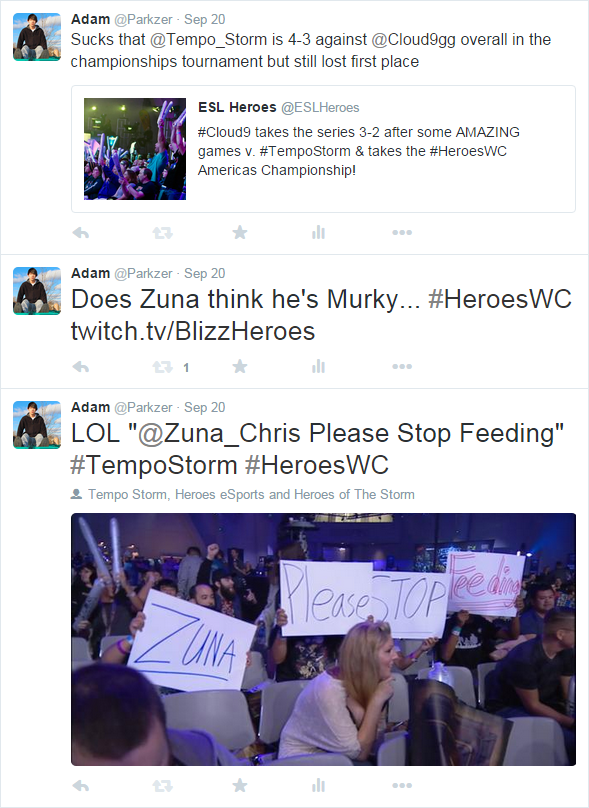
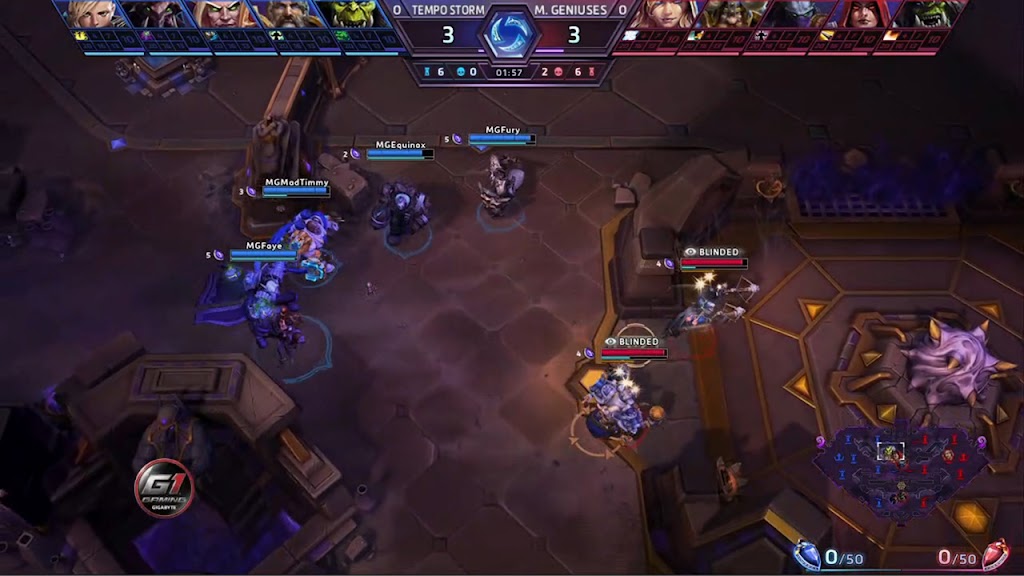 This error was temporarily patched up by just removing the team names two minutes into the game, and was fixed later on into the game.
 Apart from this, I didn’t really see any problems over the weekend-long broadcast.
Stay tuned for my in-depth article – if it’s not posted directly on my website, then it probably means it was posted elsewhere. Even in that case, I will still include excerpts and a link here soon.
Apart from this, I didn’t really see any problems over the weekend-long broadcast.
Stay tuned for my in-depth article – if it’s not posted directly on my website, then it probably means it was posted elsewhere. Even in that case, I will still include excerpts and a link here soon.  Riven, the most overpowered champion in League of Legends, and one of two champions that does not belong in the game (the other being Yasuo), has been temporarily disabled. It should obviously be permanent, but I guess the world isn’t perfect.
With four gap closers, two forms of hard crowd control, a defensive ability that scales off of an offensive stat, a basic attack modifier with every skill, a mechanic called animation canceling that makes her look buggy and isn’t described in any tooltip, burst damage equivalent to an assassin, and unlimited sustainability at no strength reduction after purchasing life steal due to no resource limitations – it is as stupid as it sounds.
Xypherous, the designer responsible for giving birth to Riven, seems to really enjoy making changes to the game that piss people off (or at the very least, me).
He’s the creator of Nautilus, the tank with four forms of crowd control and an ultimate that basically crowd controls someone for several seconds as they watch in terror at the advancing depth charge that’s about to throw them airborne. Not to mention most people running away, behind their allies, and screwing over their entire team in the process.
He’s the creator of Lulu, the wildly underrated support that’s just as good as Janna at denying the enemies, but also deals several times more damage than her.
And of course, he’s responsible for reworking Heimerdinger and changing the champion that I loved.
I miss you, pre-rework Heimerdinger.
(This post isn’t endorsed by Riot Games and doesn’t reflect the views or opinions of Riot Games or anyone officially involved in producing or managing League of Legends. League of Legends and Riot Games are trademarks or registered trademarks of Riot Games, Inc. League of Legends © Riot Games, Inc.)
Riven, the most overpowered champion in League of Legends, and one of two champions that does not belong in the game (the other being Yasuo), has been temporarily disabled. It should obviously be permanent, but I guess the world isn’t perfect.
With four gap closers, two forms of hard crowd control, a defensive ability that scales off of an offensive stat, a basic attack modifier with every skill, a mechanic called animation canceling that makes her look buggy and isn’t described in any tooltip, burst damage equivalent to an assassin, and unlimited sustainability at no strength reduction after purchasing life steal due to no resource limitations – it is as stupid as it sounds.
Xypherous, the designer responsible for giving birth to Riven, seems to really enjoy making changes to the game that piss people off (or at the very least, me).
He’s the creator of Nautilus, the tank with four forms of crowd control and an ultimate that basically crowd controls someone for several seconds as they watch in terror at the advancing depth charge that’s about to throw them airborne. Not to mention most people running away, behind their allies, and screwing over their entire team in the process.
He’s the creator of Lulu, the wildly underrated support that’s just as good as Janna at denying the enemies, but also deals several times more damage than her.
And of course, he’s responsible for reworking Heimerdinger and changing the champion that I loved.
I miss you, pre-rework Heimerdinger.
(This post isn’t endorsed by Riot Games and doesn’t reflect the views or opinions of Riot Games or anyone officially involved in producing or managing League of Legends. League of Legends and Riot Games are trademarks or registered trademarks of Riot Games, Inc. League of Legends © Riot Games, Inc.)