 (Photo courtesy of Wikia.com)Volibear’s passive is Chosen of the Storm. Every two minutes, Volibear will restore 30% of his maximum health once he receives damage that sets him below 30% of his health. This restoration process is relatively quick, and can help Volibear stay alive long enough in fights to finish off the opponent. However, it is still possible for someone with high amounts of damage to kill Volibear before his passive fully finishes kicking in.Volibear’s Q ability is Rolling Thunder. For four seconds, Volibear gains 15% movement speed; this movement speed buff is increased to 45% if he is headed in the direction of a champion. If he basic attacks during these four sections, the attack will deal additional physical damage and flip the opponent over his shoulder.Frenzy is what allows Volibear to deal lots of damage, and is his W ability. With every basic attack, up to three stacks, Frenzy will increase Volibear’s attack speed. The stacks will reset to 0 when Volibear is out of combat for four seconds. When Frenzy is at its full three stacks, its active portion activates. Volibear can then use it to deal a small nuke to a single target that scales off Volibear’s health and the amount of health the opponent is missing. Because of the high cooldown of 18 seconds, it is recommended to save this until later in the fight in order to maximize damage dealt, because once you use the ability, it is likely that you won’t be able to use it again in the same fight.Volibear’s E is Majestic Roar, which deals magic damage around him, slows champions, and fears minions. The fear is useful for eliminating minion aggression for 3 seconds, as well as identifying clones such as those made by Shaco and LeBlanc (as these clones will be feared while the real champion will only be slowed).Volibear’s ultimate is Thunder Claws. For 12 seconds, Volibear’s basic attacks unleash a chain of lightning that deals bonus magic damage to up to three additional targets. This allows him to deal additional damage in team fights where opponents are clumped up, as well as do area-of-effect damage with his basic attacks.I usually take a defensive first item, like Doran’s Shield on Twisted Treeline or Ruby Crystal on Summoner’s Rift. On Twisted Treeline, I take my first point in Q for the utility so our team has a higher chance of getting first blood. On Summoner’s Rift, I take my first point in W for more damage output, and to be able to harass my opponent by inflicting damage (which is increased by the fact that I have a pure health starting item). For boots, I generally take Mercury Treads for the defense and tenacity. Usually, the only reason I would take Ninja Tabi is if the opposing team is heavily based on attack damage and/or does not carry many crowd control or stun abilities.The next item I get is Wriggle’s Lantern. I find it useful to get this item both for the early game damage output (which balances out with the defense I already got from my starting item and boots) and for the free ward I get once every three minutes (which means, I can constantly have either the middle of Twisted Treeline or the intersection of Baron on Summoner’s Rift warded to check for attempted ganks).The two core items that I always get in every game are Warmog’s Armor and Atma’s Impaler. I almost always rush Warmog’s Armor as quickly as possible to get it farmed up to its full potential as early as possible. On top of that, Warmog’s Armor synergizes nicely with both Volibear’s passive (if you have more health, you regenerate more health), and with Volibear’s W (which, as a reminder, scales off Volibear’s health). Atma’s Impaler provides attack damage that is scaled off health, so it works nicely with all the health that Warmog’s Armor provides. It also keeps Volibear bulky with the additional armor, as well as gives Volibear the chance to get lucky and turn a fight around with its increase of critical hit chance.After these four items, the remaining items are completely conditional depending on what my team needs me to be. If I am continuing on with my own build, I would build Phage (which helps me stick to my opponents with its slow) and Recurve Bow (which allows me to hit more frequently, which is particularly helpful when my ultimate is active, as it is active for a flat 12 seconds and does not get deactivated after a particular number of hits). I eventually finish building these items into Frozen Mallet (which gives even more health, making Volibear more bulkier and making his abilities even more powerful), and either Wit’s End if I need magic resistance or Ionic Spark if I don’t.After all my item slots are filled, if the game is still going on and I have more gold, I sell my Doran’s Shield and replace it with a stronger defensive item, depending on the situation – Frozen Heart if the dominating opponents are more heavily based on attack damage, and Force of Nature if the dominating opponents are more heavily based on ability power. Both of these items work well with Volibear: Frozen Heart gives Volibear cooldown reduction so he can use his abilities more frequently, while Force of Nature gives Volibear health regeneration based off his maximum health (which, at this point, should be extremely high). Finally, if the game happens to go on even longer and I have even more gold, I will most likely sell my Wriggle’s Lantern and replace it with a Bloodthirster, as the extra attack damage and life steal is usually more beneficial on Volibear than the wards. Any additional spare gold after this point should be spent on Elixirs.One item I usually do not like getting on Volibear (or on any off-tank or tank) is Guardian Angel. Even though you’re built to output a lot of damage, you should still be the (or one of the) bulkiest and tankiest person on your team. If your enemies see you with a Guardian Angel, they’ll completely give up on killing you and target down your squishier allies before getting to you, which effectively puts all your health and defensive capabilities to waste. The enemies will get frustrated with you, naturally avoid attacking you, become automatically better at target firing, and prevent you from absorbing all the punishment that you can eat up without a problem.If you’re familiar with how I play League of Legends, I always get Heal and Teleport on Summoner’s Rift, and Heal on Twisted Treeline. With Volibear, I think the best secondary summoner spell for Twisted Treeline is either Ignite or Exhaust. Because you are a melee champion and you will be in the middle of all your opponents soaking up damage, you will be in range to be able to Ignite or Exhaust key enemies. Because you won’t have to worry about kiting opponents, you will have more of your attention to focus on who is restoring the most health and needs to be Ignited, or who is outputting the most damage and needs to be Exhausted. Also, Ignite is extremely useful to pick up first blood on Twisted Treeline and get yourself the early 400 gold lead to start with your basic boots of speed.When engaging in team fights, I like to initiate with my Q and start chasing an opponent, usually someone who relies heavily on range for safety in order to disrupt their positioning and throw them off. Sometimes, your opponents will Flash out of your Q because they know that it could mean instant death if your allies follow up the flip – this is good, as if you get the upper hand in the team fight, your opponents will have no summoner spells for easy escapes over walls. After I flip an opponent, I keep moving and take a step in the direction I think they are going to run in order to stick to them as much as possible, always moving between attacks. Once the opponent realizes where they are and tries to reposition themselves, I activate E to slow them. By this time, I should have auto attacked enough times for my W to be active. When the biggest threat is low of health, I hit them with my W to quicken the kill and to remove them from the picture. I then prioritize the next target and flip and slow them again if those abilities are out of cooldown. This process is repeated until all enemies are killed. At any point in this process, when other enemies join the team fight, I activate my R to deal area of effect damage. I don’t activate it immediately or if we are engaging against only one opponent, as, although it will deal extra damage to the one opponent, it will be much more useful when there are also other enemies to receive damage as well. If at any point an enemy is attempting to run away because they are low of health and my Q is out of cooldown, I charge at them and flip them back into the fight so they remain in range of my Thunder Claws and I end up passively picking up the kill while still targeting down someone else.Overall, I think that Volibear is an extremely fun champion to play. Volibear is one of two current champions who can flip people out of position (the other being Singed), which is an extremely powerful ability in many different situations. I have heard from friends that Volibear is relatively underpowered compared to other champions, but I have still been able to successfully get a positive score with Volibear in all but a few games (meaning, I had more kills than deaths), even if we were defeated. In about half of the games, I carried my team, even as an off-tank. In two separate instances, I engaged enemies 3-on-1 on Twisted Treeline, but still managed to kill them all and score an ace. If you put in the effort to get good with Volibear and be alert to how you can disrupt your enemies as much as possible, you will be an important part of any team composition.
 This Week in League of Legends: Volibear
This post is over 14 years old and may contain information that is incorrect, outdated, or no longer relevant.
My views and opinions can change, and those that are expressed in this post may not necessarily reflect the ones I hold today.
I was hoping to get out the first “This Week in League of Legends” last week, but after getting caught up with some other stuff, I decided to spend another week playing Volibear before writing this up.On the week of May 22, 2012, Volibear, the Thunder’s Roar, was one of the free champions for the free champion rotation. Volibear was actually one of the champions I’ve always wanted to try because he fits the role I like to play very well – he is a disruptive champion that can still deal a lot of damage, and can easily be built as an off-tank while almost maintaining the full tankiness of a straight tank and the full damage of a pseudo-carry.(Photo courtesy of Wikia.com)Volibear’s passive is Chosen of the Storm. Every two minutes, Volibear will restore 30% of his maximum health once he receives damage that sets him below 30% of his health. This restoration process is relatively quick, and can help Volibear stay alive long enough in fights to finish off the opponent. However, it is still possible for someone with high amounts of damage to kill Volibear before his passive fully finishes kicking in.Volibear’s Q ability is Rolling Thunder. For four seconds, Volibear gains 15% movement speed; this movement speed buff is increased to 45% if he is headed in the direction of a champion. If he basic attacks during these four sections, the attack will deal additional physical damage and flip the opponent over his shoulder.Frenzy is what allows Volibear to deal lots of damage, and is his W ability. With every basic attack, up to three stacks, Frenzy will increase Volibear’s attack speed. The stacks will reset to 0 when Volibear is out of combat for four seconds. When Frenzy is at its full three stacks, its active portion activates. Volibear can then use it to deal a small nuke to a single target that scales off Volibear’s health and the amount of health the opponent is missing. Because of the high cooldown of 18 seconds, it is recommended to save this until later in the fight in order to maximize damage dealt, because once you use the ability, it is likely that you won’t be able to use it again in the same fight.Volibear’s E is Majestic Roar, which deals magic damage around him, slows champions, and fears minions. The fear is useful for eliminating minion aggression for 3 seconds, as well as identifying clones such as those made by Shaco and LeBlanc (as these clones will be feared while the real champion will only be slowed).Volibear’s ultimate is Thunder Claws. For 12 seconds, Volibear’s basic attacks unleash a chain of lightning that deals bonus magic damage to up to three additional targets. This allows him to deal additional damage in team fights where opponents are clumped up, as well as do area-of-effect damage with his basic attacks.I usually take a defensive first item, like Doran’s Shield on Twisted Treeline or Ruby Crystal on Summoner’s Rift. On Twisted Treeline, I take my first point in Q for the utility so our team has a higher chance of getting first blood. On Summoner’s Rift, I take my first point in W for more damage output, and to be able to harass my opponent by inflicting damage (which is increased by the fact that I have a pure health starting item). For boots, I generally take Mercury Treads for the defense and tenacity. Usually, the only reason I would take Ninja Tabi is if the opposing team is heavily based on attack damage and/or does not carry many crowd control or stun abilities.The next item I get is Wriggle’s Lantern. I find it useful to get this item both for the early game damage output (which balances out with the defense I already got from my starting item and boots) and for the free ward I get once every three minutes (which means, I can constantly have either the middle of Twisted Treeline or the intersection of Baron on Summoner’s Rift warded to check for attempted ganks).The two core items that I always get in every game are Warmog’s Armor and Atma’s Impaler. I almost always rush Warmog’s Armor as quickly as possible to get it farmed up to its full potential as early as possible. On top of that, Warmog’s Armor synergizes nicely with both Volibear’s passive (if you have more health, you regenerate more health), and with Volibear’s W (which, as a reminder, scales off Volibear’s health). Atma’s Impaler provides attack damage that is scaled off health, so it works nicely with all the health that Warmog’s Armor provides. It also keeps Volibear bulky with the additional armor, as well as gives Volibear the chance to get lucky and turn a fight around with its increase of critical hit chance.After these four items, the remaining items are completely conditional depending on what my team needs me to be. If I am continuing on with my own build, I would build Phage (which helps me stick to my opponents with its slow) and Recurve Bow (which allows me to hit more frequently, which is particularly helpful when my ultimate is active, as it is active for a flat 12 seconds and does not get deactivated after a particular number of hits). I eventually finish building these items into Frozen Mallet (which gives even more health, making Volibear more bulkier and making his abilities even more powerful), and either Wit’s End if I need magic resistance or Ionic Spark if I don’t.After all my item slots are filled, if the game is still going on and I have more gold, I sell my Doran’s Shield and replace it with a stronger defensive item, depending on the situation – Frozen Heart if the dominating opponents are more heavily based on attack damage, and Force of Nature if the dominating opponents are more heavily based on ability power. Both of these items work well with Volibear: Frozen Heart gives Volibear cooldown reduction so he can use his abilities more frequently, while Force of Nature gives Volibear health regeneration based off his maximum health (which, at this point, should be extremely high). Finally, if the game happens to go on even longer and I have even more gold, I will most likely sell my Wriggle’s Lantern and replace it with a Bloodthirster, as the extra attack damage and life steal is usually more beneficial on Volibear than the wards. Any additional spare gold after this point should be spent on Elixirs.One item I usually do not like getting on Volibear (or on any off-tank or tank) is Guardian Angel. Even though you’re built to output a lot of damage, you should still be the (or one of the) bulkiest and tankiest person on your team. If your enemies see you with a Guardian Angel, they’ll completely give up on killing you and target down your squishier allies before getting to you, which effectively puts all your health and defensive capabilities to waste. The enemies will get frustrated with you, naturally avoid attacking you, become automatically better at target firing, and prevent you from absorbing all the punishment that you can eat up without a problem.If you’re familiar with how I play League of Legends, I always get Heal and Teleport on Summoner’s Rift, and Heal on Twisted Treeline. With Volibear, I think the best secondary summoner spell for Twisted Treeline is either Ignite or Exhaust. Because you are a melee champion and you will be in the middle of all your opponents soaking up damage, you will be in range to be able to Ignite or Exhaust key enemies. Because you won’t have to worry about kiting opponents, you will have more of your attention to focus on who is restoring the most health and needs to be Ignited, or who is outputting the most damage and needs to be Exhausted. Also, Ignite is extremely useful to pick up first blood on Twisted Treeline and get yourself the early 400 gold lead to start with your basic boots of speed.When engaging in team fights, I like to initiate with my Q and start chasing an opponent, usually someone who relies heavily on range for safety in order to disrupt their positioning and throw them off. Sometimes, your opponents will Flash out of your Q because they know that it could mean instant death if your allies follow up the flip – this is good, as if you get the upper hand in the team fight, your opponents will have no summoner spells for easy escapes over walls. After I flip an opponent, I keep moving and take a step in the direction I think they are going to run in order to stick to them as much as possible, always moving between attacks. Once the opponent realizes where they are and tries to reposition themselves, I activate E to slow them. By this time, I should have auto attacked enough times for my W to be active. When the biggest threat is low of health, I hit them with my W to quicken the kill and to remove them from the picture. I then prioritize the next target and flip and slow them again if those abilities are out of cooldown. This process is repeated until all enemies are killed. At any point in this process, when other enemies join the team fight, I activate my R to deal area of effect damage. I don’t activate it immediately or if we are engaging against only one opponent, as, although it will deal extra damage to the one opponent, it will be much more useful when there are also other enemies to receive damage as well. If at any point an enemy is attempting to run away because they are low of health and my Q is out of cooldown, I charge at them and flip them back into the fight so they remain in range of my Thunder Claws and I end up passively picking up the kill while still targeting down someone else.Overall, I think that Volibear is an extremely fun champion to play. Volibear is one of two current champions who can flip people out of position (the other being Singed), which is an extremely powerful ability in many different situations. I have heard from friends that Volibear is relatively underpowered compared to other champions, but I have still been able to successfully get a positive score with Volibear in all but a few games (meaning, I had more kills than deaths), even if we were defeated. In about half of the games, I carried my team, even as an off-tank. In two separate instances, I engaged enemies 3-on-1 on Twisted Treeline, but still managed to kill them all and score an ace. If you put in the effort to get good with Volibear and be alert to how you can disrupt your enemies as much as possible, you will be an important part of any team composition.
(Photo courtesy of Wikia.com)Volibear’s passive is Chosen of the Storm. Every two minutes, Volibear will restore 30% of his maximum health once he receives damage that sets him below 30% of his health. This restoration process is relatively quick, and can help Volibear stay alive long enough in fights to finish off the opponent. However, it is still possible for someone with high amounts of damage to kill Volibear before his passive fully finishes kicking in.Volibear’s Q ability is Rolling Thunder. For four seconds, Volibear gains 15% movement speed; this movement speed buff is increased to 45% if he is headed in the direction of a champion. If he basic attacks during these four sections, the attack will deal additional physical damage and flip the opponent over his shoulder.Frenzy is what allows Volibear to deal lots of damage, and is his W ability. With every basic attack, up to three stacks, Frenzy will increase Volibear’s attack speed. The stacks will reset to 0 when Volibear is out of combat for four seconds. When Frenzy is at its full three stacks, its active portion activates. Volibear can then use it to deal a small nuke to a single target that scales off Volibear’s health and the amount of health the opponent is missing. Because of the high cooldown of 18 seconds, it is recommended to save this until later in the fight in order to maximize damage dealt, because once you use the ability, it is likely that you won’t be able to use it again in the same fight.Volibear’s E is Majestic Roar, which deals magic damage around him, slows champions, and fears minions. The fear is useful for eliminating minion aggression for 3 seconds, as well as identifying clones such as those made by Shaco and LeBlanc (as these clones will be feared while the real champion will only be slowed).Volibear’s ultimate is Thunder Claws. For 12 seconds, Volibear’s basic attacks unleash a chain of lightning that deals bonus magic damage to up to three additional targets. This allows him to deal additional damage in team fights where opponents are clumped up, as well as do area-of-effect damage with his basic attacks.I usually take a defensive first item, like Doran’s Shield on Twisted Treeline or Ruby Crystal on Summoner’s Rift. On Twisted Treeline, I take my first point in Q for the utility so our team has a higher chance of getting first blood. On Summoner’s Rift, I take my first point in W for more damage output, and to be able to harass my opponent by inflicting damage (which is increased by the fact that I have a pure health starting item). For boots, I generally take Mercury Treads for the defense and tenacity. Usually, the only reason I would take Ninja Tabi is if the opposing team is heavily based on attack damage and/or does not carry many crowd control or stun abilities.The next item I get is Wriggle’s Lantern. I find it useful to get this item both for the early game damage output (which balances out with the defense I already got from my starting item and boots) and for the free ward I get once every three minutes (which means, I can constantly have either the middle of Twisted Treeline or the intersection of Baron on Summoner’s Rift warded to check for attempted ganks).The two core items that I always get in every game are Warmog’s Armor and Atma’s Impaler. I almost always rush Warmog’s Armor as quickly as possible to get it farmed up to its full potential as early as possible. On top of that, Warmog’s Armor synergizes nicely with both Volibear’s passive (if you have more health, you regenerate more health), and with Volibear’s W (which, as a reminder, scales off Volibear’s health). Atma’s Impaler provides attack damage that is scaled off health, so it works nicely with all the health that Warmog’s Armor provides. It also keeps Volibear bulky with the additional armor, as well as gives Volibear the chance to get lucky and turn a fight around with its increase of critical hit chance.After these four items, the remaining items are completely conditional depending on what my team needs me to be. If I am continuing on with my own build, I would build Phage (which helps me stick to my opponents with its slow) and Recurve Bow (which allows me to hit more frequently, which is particularly helpful when my ultimate is active, as it is active for a flat 12 seconds and does not get deactivated after a particular number of hits). I eventually finish building these items into Frozen Mallet (which gives even more health, making Volibear more bulkier and making his abilities even more powerful), and either Wit’s End if I need magic resistance or Ionic Spark if I don’t.After all my item slots are filled, if the game is still going on and I have more gold, I sell my Doran’s Shield and replace it with a stronger defensive item, depending on the situation – Frozen Heart if the dominating opponents are more heavily based on attack damage, and Force of Nature if the dominating opponents are more heavily based on ability power. Both of these items work well with Volibear: Frozen Heart gives Volibear cooldown reduction so he can use his abilities more frequently, while Force of Nature gives Volibear health regeneration based off his maximum health (which, at this point, should be extremely high). Finally, if the game happens to go on even longer and I have even more gold, I will most likely sell my Wriggle’s Lantern and replace it with a Bloodthirster, as the extra attack damage and life steal is usually more beneficial on Volibear than the wards. Any additional spare gold after this point should be spent on Elixirs.One item I usually do not like getting on Volibear (or on any off-tank or tank) is Guardian Angel. Even though you’re built to output a lot of damage, you should still be the (or one of the) bulkiest and tankiest person on your team. If your enemies see you with a Guardian Angel, they’ll completely give up on killing you and target down your squishier allies before getting to you, which effectively puts all your health and defensive capabilities to waste. The enemies will get frustrated with you, naturally avoid attacking you, become automatically better at target firing, and prevent you from absorbing all the punishment that you can eat up without a problem.If you’re familiar with how I play League of Legends, I always get Heal and Teleport on Summoner’s Rift, and Heal on Twisted Treeline. With Volibear, I think the best secondary summoner spell for Twisted Treeline is either Ignite or Exhaust. Because you are a melee champion and you will be in the middle of all your opponents soaking up damage, you will be in range to be able to Ignite or Exhaust key enemies. Because you won’t have to worry about kiting opponents, you will have more of your attention to focus on who is restoring the most health and needs to be Ignited, or who is outputting the most damage and needs to be Exhausted. Also, Ignite is extremely useful to pick up first blood on Twisted Treeline and get yourself the early 400 gold lead to start with your basic boots of speed.When engaging in team fights, I like to initiate with my Q and start chasing an opponent, usually someone who relies heavily on range for safety in order to disrupt their positioning and throw them off. Sometimes, your opponents will Flash out of your Q because they know that it could mean instant death if your allies follow up the flip – this is good, as if you get the upper hand in the team fight, your opponents will have no summoner spells for easy escapes over walls. After I flip an opponent, I keep moving and take a step in the direction I think they are going to run in order to stick to them as much as possible, always moving between attacks. Once the opponent realizes where they are and tries to reposition themselves, I activate E to slow them. By this time, I should have auto attacked enough times for my W to be active. When the biggest threat is low of health, I hit them with my W to quicken the kill and to remove them from the picture. I then prioritize the next target and flip and slow them again if those abilities are out of cooldown. This process is repeated until all enemies are killed. At any point in this process, when other enemies join the team fight, I activate my R to deal area of effect damage. I don’t activate it immediately or if we are engaging against only one opponent, as, although it will deal extra damage to the one opponent, it will be much more useful when there are also other enemies to receive damage as well. If at any point an enemy is attempting to run away because they are low of health and my Q is out of cooldown, I charge at them and flip them back into the fight so they remain in range of my Thunder Claws and I end up passively picking up the kill while still targeting down someone else.Overall, I think that Volibear is an extremely fun champion to play. Volibear is one of two current champions who can flip people out of position (the other being Singed), which is an extremely powerful ability in many different situations. I have heard from friends that Volibear is relatively underpowered compared to other champions, but I have still been able to successfully get a positive score with Volibear in all but a few games (meaning, I had more kills than deaths), even if we were defeated. In about half of the games, I carried my team, even as an off-tank. In two separate instances, I engaged enemies 3-on-1 on Twisted Treeline, but still managed to kill them all and score an ace. If you put in the effort to get good with Volibear and be alert to how you can disrupt your enemies as much as possible, you will be an important part of any team composition. 
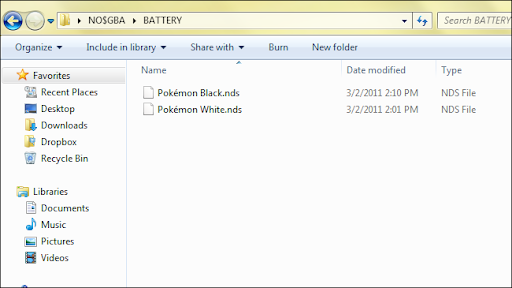
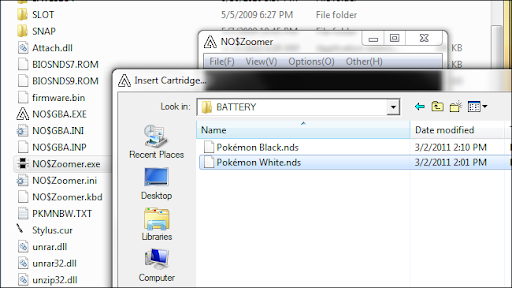
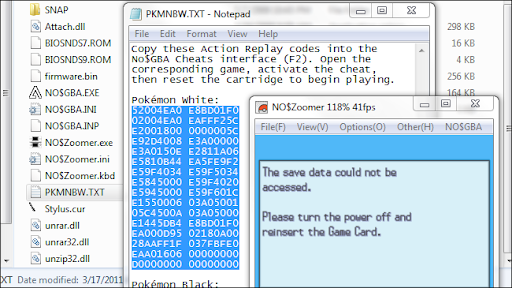
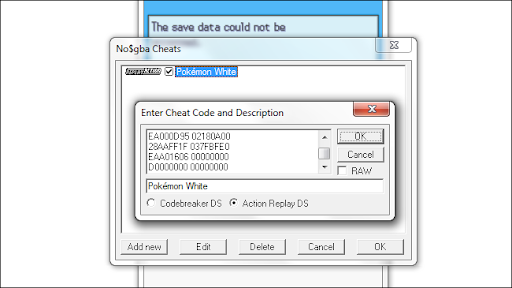
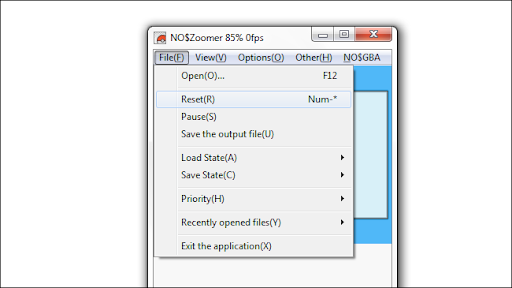
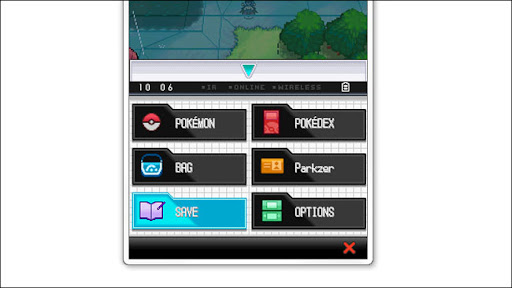 If this doesn’t work, make sure that you unarchived the No$GBA folder to a freely writable directory. For example, your My Documents folder is a freely writable directory, while your Program Files folder is not (it requires administrator authorization).If you user profile is set as an administrator, you can also try running NO$Zoomer as an administrator. To do this, right-click on the file and click “Run as administrator.”